
Alexandrite
Chrysoberyl variety · BeAl₂O₄
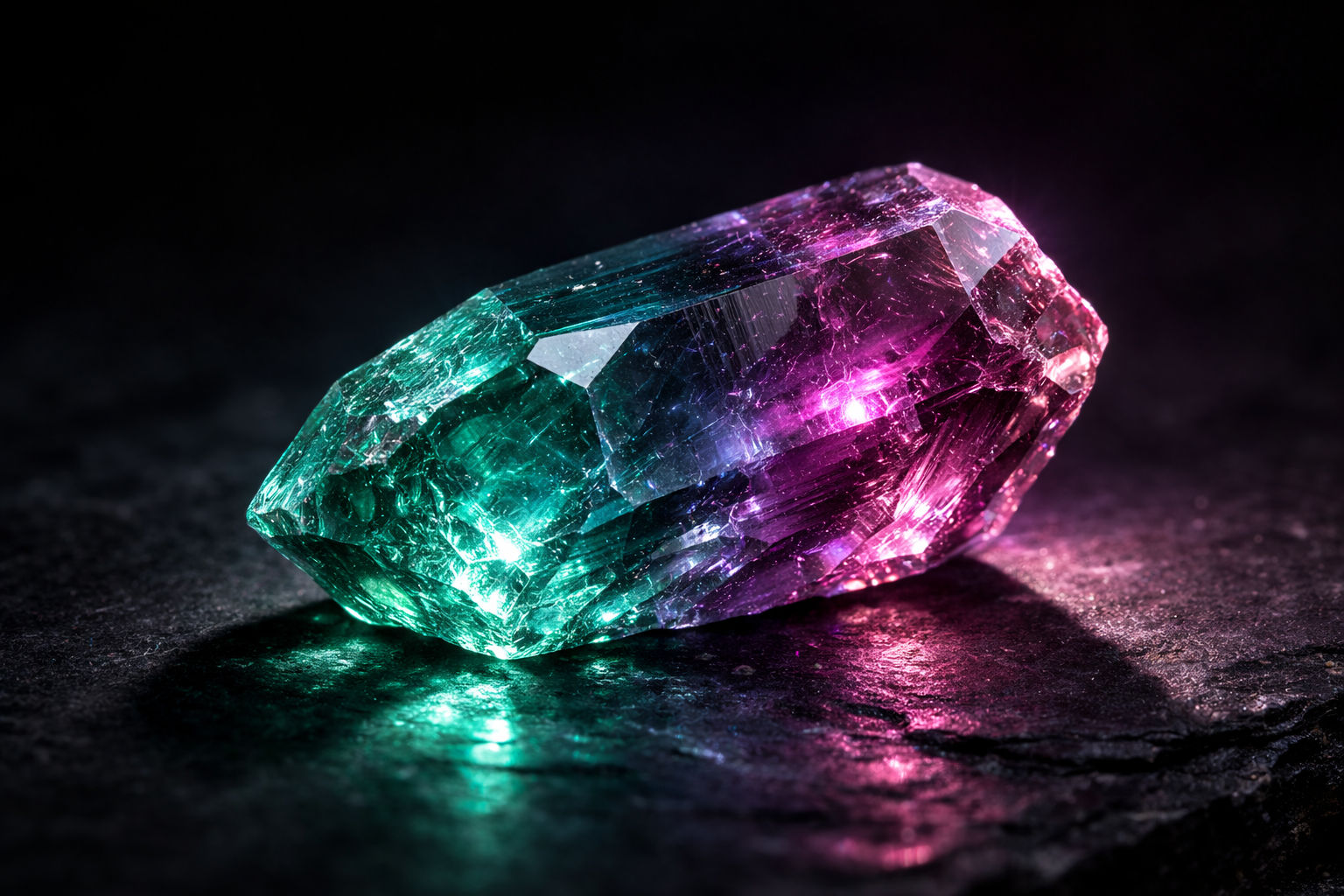
“Alexandrite does not choose one face: it reveals what the light allows.”
-WickedOverview
Alexandrite is a rare color-changing variety of the mineral chrysoberyl. In daylight, it typically appears green to bluish-green; under incandescent light, it shifts to red or purplish-red. This dramatic transformation is caused by trace chromium within the crystal structure.
Discovered in the 19th century in Russia’s Ural Mountains, Alexandrite quickly became associated with royalty and duality. Its ability to change color under different lighting conditions has made it a stone of perception, adaptability, and energetic transition.
In witchcraft, Alexandrite is often worked with during periods of personal evolution. It supports identity shifts, decision-making during crossroads, and the ability to hold two truths without collapsing into contradiction.
Correspondences
Element
Planet
Energy
Chakra
Color
Appearance
Green to bluish-green in natural daylight. Red to purplish-red under incandescent or candlelight. The color shift is caused by trace chromium within the crystal structure.
Alexandrite in Witchcraft
Good for
Transformation, identity shifts, intuition, emotional intelligence, adaptability, decision-making
Protects Against
Stagnation, rigid thinking, self-deception, emotional confusion
Pairs Well With
Clear Quartz, Labradorite, Moonstone
Magickal Tips
Alexandrite is especially potent during life transitions.
It is often placed on the altar during identity work or shadow integration practices where perception must shift without collapse.
This stone supports the ability to hold complexity: to evolve without abandoning previous versions of the self.
Ways to Work With Alexandrite
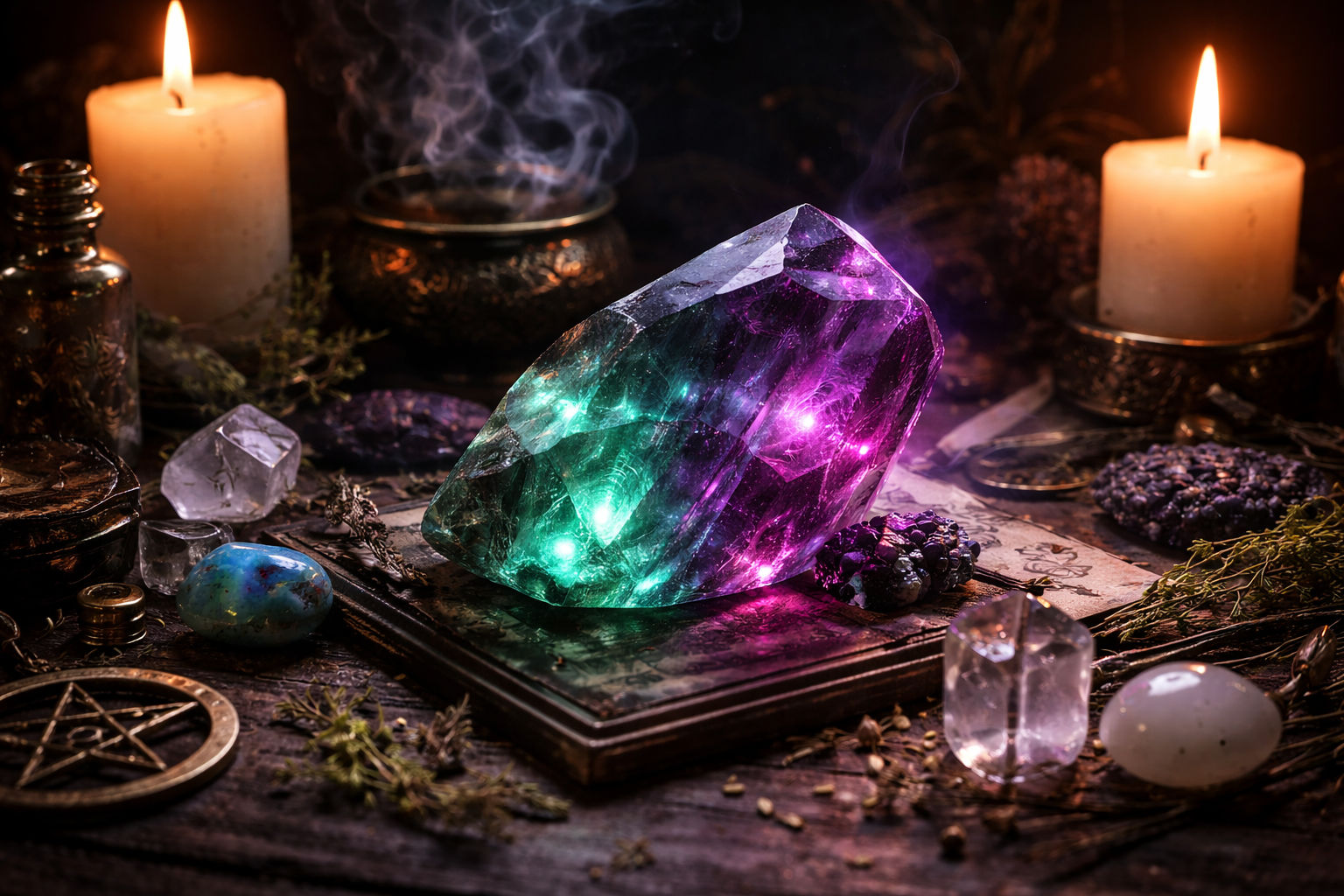
Alexandrite is most commonly worked with as a personal talisman during transitional periods. It can be carried when navigating new roles, shifting relationships, or major life decisions.
In meditation, it is often placed near the Heart or Third Eye to support intuitive clarity and emotional alignment during change. Because of its rarity, it is sometimes used ceremonially rather than daily.
In Practice
Alexandrite is best reached for when life refuses to stay singular. It is a stone for liminal space: when identity shifts, when truth evolves, when circumstances demand flexibility rather than force.
In longer workings, it behaves as a stabilizer during change. Rather than pushing transformation aggressively, it supports graceful adaptation and perceptual expansion.
Folklore & Tradition

Named after Tsar Alexander II of Russia, Alexandrite was discovered in the Ural Mountains in the 1830s. Its red and green color change mirrored the imperial colors of Russia, contributing to its early association with royalty.
In modern metaphysical traditions, its shifting appearance has positioned it as a stone of duality, insight, and perceptual evolution.
Properties
Mineral Class
Oxide (Chrysoberyl)
Hardness
8.5 on the Mohs scale
Crystal System
Orthorhombic
Notable Feature
Color change due to chromium content
Care and Cleansing
Alexandrite is a durable stone and can be cleansed using smoke, sound, or moonlight. It is generally safe for brief water contact, though prolonged soaking is not recommended.
To preserve its color integrity, avoid extended exposure to harsh chemicals or abrasive materials.
Safety
Alexandrite is not intended for ingestion. Avoid grinding or creating dust from any mineral specimen, and do not prepare crystal elixirs without proper knowledge of mineral safety.
This grimoire is written for spiritual and educational purposes and is not medical advice.